Why Traditional Academics Fall Short
Emotional intelligence is not a soft skill — it is the foundation of every meaningful relationship, collaboration and leadership act. Yet most schools never teach children to identify, understand or regulate their emotions effectively.
Empathy
Understanding and genuinely caring about others' feelings and perspectives.
Self-Awareness
Accurately identifying and naming one's own emotional states.
Conflict Resolution
Handling disagreement without aggression or withdrawal.
Teamwork
Collaborating with peers who think and feel differently.
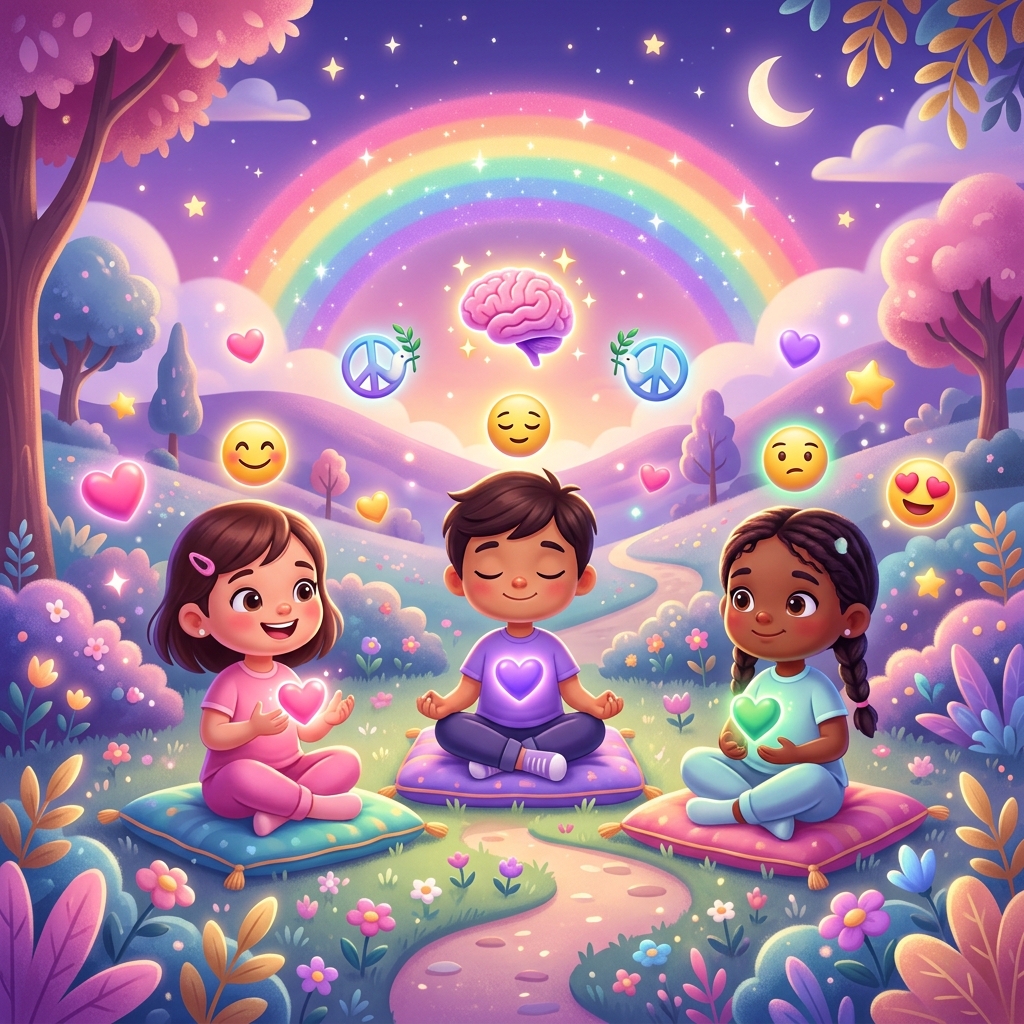
Emotionally Intelligent Leaders
Progress Milestones
Emotional vocabulary
Accurately names and describes their emotional states.
Emotion-behavior link
Understands how emotions affect thinking and decisions.
Empathy development
Genuinely considers others' perspectives before reacting.
Conflict repair
Handles and resolves conflicts without aggression or withdrawal.
Boundary communication
Expresses needs and limits clearly and respectfully.
The Program Vision
Children who complete this track become calmer under pressure, more capable of repairing relationships after conflict and more likely to lead with understanding rather than authority.
Emotional Depth: Moving from 'I'm fine' to accurately naming complex emotional states.
Relationship Repair: Knowing how to restore trust and connection after conflict.
Regulation Skills: Pausing before reacting and choosing a constructive response.
36-Class Emotional Intelligence Curriculum
Emotional Vocabulary
- ✓Naming emotions precisely
- ✓The emotion wheel
- ✓Body signals of emotion
- ✓Emotion journaling
Self-Awareness
- ✓Triggers and patterns
- ✓Emotion-thought connection
- ✓Self-monitoring techniques
- ✓Strengths inventory
Empathy Building
- ✓Perspective-taking exercises
- ✓Active listening
- ✓Compassion vs sympathy
- ✓Peer storytelling
Regulation Skills
- ✓Pause and reflect strategies
- ✓Managing anger
- ✓Handling anxiety
- ✓Calming toolbox
Conflict & Communication
- ✓Conflict without aggression
- ✓I-statements
- ✓Apology and repair
- ✓Boundary setting
Leadership & Showcase
- ✓Emotionally intelligent leadership
- ✓Group challenge final project
- ✓Parent showcase
- ✓Certificate ceremony
What Your Child Will Gain
Accurately identifies and names own emotional states
Recognizes how emotions affect decisions and behavior
Demonstrates genuine empathy in peer interactions
Handles conflict without aggression or withdrawal
Communicates needs and limits clearly
Regulates emotional reactions in stressful situations
Repairs relationships after disagreements
Shows increased patience and composure in group settings
Common Questions
Build the skill that changes everything.
Book a free demo class and see how TrueLern's Emotional Intelligence track helps children aged 6 to 16 develop the empathy, self-awareness and regulation skills that make them exceptional in every relationship.